Source Office Chair Ball Connector for Swivel, Bar, and Office Use
Compare 30 verified listings for office chair ball connector components suitable for swivel, bar, and general office applications. Buyers can evaluate steel tie rod ends, die-cast parts, and customized ball bead chains with varying MOQs and delivery times from Chinese manufacturers.
Key considerations
Products List


Comprehensive Sourcing Guide
Office Chair Ball Connector Sourcing Guide
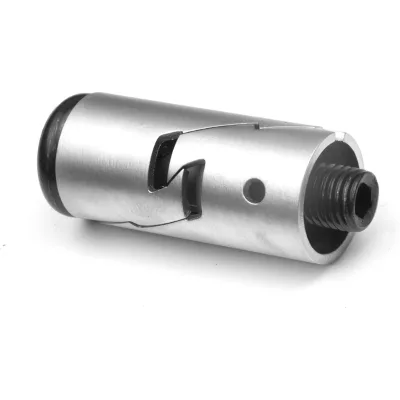
Sourcing the correct ball connector for office chairs requires a clear understanding of the component’s role in ensuring stability and smooth swivel functionality. These connectors, often referred to as tie rod ends or ball beads, are critical for linking the chair base to the gas lift or seat mechanism. Buyers must recognize that while the core function is universal, the specific geometry and thread size can vary significantly between manufacturers. The observed market data indicates a wide range of available models, from standard M8 threads to customized wire diameters, necessitating precise verification before placing bulk orders.
Procurement teams should also consider the material composition and surface treatment, as these factors directly impact durability and aesthetic integration. Steel is the predominant material observed in listings, often subjected to electroplating or coating processes such as gold, silver, nickel, or black nickel finishes. These treatments not only provide corrosion resistance but also allow the connector to match the chair’s overall design language, whether it is chrome, black, or gold. Understanding these material properties helps buyers evaluate the long-term performance of the component under frequent use and varying environmental conditions.
Product Scope and Observed Listing Signals
The current market landscape for office chair ball connectors reveals a diverse array of product types, including tie rod ends, ball bead chains, and specialized geometry shapes. Listings frequently highlight customization options, with suppliers offering OEM and ODM services to meet specific design requirements. The observed minimum order quantities (MOQ) vary widely, ranging from single pieces for sampling to large volumes exceeding 100,000 units, indicating flexibility for both small-scale prototyping and mass production. Buyers should note that some suppliers specify an MOQ of 100 meters for chain-style connectors, while others negotiate based on volume, requiring clear communication of project scale.
Visual and descriptive signals in product listings often emphasize the condition of the items as new, with processing methods like die-casting being common for metal components. The place of origin is predominantly China, with specific mentions of Jiangsu and Guangdong provinces, suggesting established manufacturing hubs for these hardware parts. Additionally, the style of the connectors is described as cylinder or business-oriented, aligning with professional office furniture aesthetics. Buyers must carefully cross-reference these signals with their technical drawings, as terms like "universal" suitability may not apply to all chair models, particularly those with non-standard base configurations.
Technical Specifications to Verify
Verifying technical specifications is the most critical step in preventing assembly failures and ensuring compatibility with existing chair designs. Buyers must confirm the exact thread size, with M8 and M10 being common standards observed in the market, alongside specific model numbers like MXAC0023 or PT-WXT-016-02. The wire diameter is another key parameter, with options ranging from 1mm to 4mm, allowing for tailored strength and flexibility. It is essential to request detailed dimensional drawings or physical samples to verify that the ball joint’s radius and the connecting rod’s length match the chair’s mechanical requirements precisely.
Surface treatment and coating specifications also require rigorous verification, as these affect both the visual appeal and the lifespan of the connector. Suppliers may offer various coatings such as gold, silver, nickel, black nickel, or gunmetal, each providing different levels of corrosion resistance and wear tolerance. Buyers should inquire about the thickness of the electroplating or coating layer, especially for high-traffic office environments where frequent swiveling and weight shifts occur. Additionally, confirming the material grade of the steel used is vital to ensure the component can withstand the dynamic loads imposed by users of varying weights and usage patterns.
Compliance and Safety Documentation
While specific certification statuses are not uniformly listed in all product descriptions, buyers must proactively request compliance documentation to ensure the connectors meet international safety and quality standards. For office furniture components, adherence to standards such as EN 1335 for office desk and chair dimensions and safety is crucial, although buyers should verify if this standard explicitly covers small hardware connectors or if other relevant norms apply. It is advisable to ask suppliers for test reports that demonstrate the connector’s load-bearing capacity, fatigue resistance, and durability under repeated cycling, ensuring the component will not fail prematurely under normal use.
Documentation should also include material safety declarations, particularly regarding the coatings and plating processes used. Buyers should verify that the electroplating or surface treatments comply with environmental regulations such as RoHS, ensuring that harmful substances like lead or cadmium are not present in the finishes. This is especially important for office environments where employee health and safety are prioritized. Additionally, requesting a certificate of conformity from the manufacturer can provide assurance that the production process adheres to consistent quality control measures, reducing the risk of receiving defective batches that could compromise the integrity of the final office chair product.
Cost Drivers and Commercial Terms
The cost of office chair ball connectors is influenced by several factors, including the material type, surface treatment complexity, and order volume. Steel is the primary material observed, but the choice of coating, such as gold or gunmetal, can significantly impact the unit price due to the additional processing steps involved. Buyers should anticipate that customized wire diameters or non-standard geometries may incur higher costs compared to off-the-shelf M8 or M10 standard parts. Understanding these cost drivers allows procurement teams to negotiate more effectively and allocate budget appropriately based on the desired quality and aesthetic specifications of the final product.
Commercial terms also play a significant role in the total cost of ownership. Payment methods typically include T/T and L/C, with delivery times ranging from 3 days for some items to 30 days for others, depending on customization and production capacity. Shipping options are flexible, with sea, air, and express freight available, each carrying different cost and time implications. Buyers should clarify the packing details, such as wooden packages or cartons with pallets, to ensure safe transit and minimize damage risks. Negotiating MOQs and lead times can also help optimize cash flow and inventory management, particularly for large-scale procurement projects.
Supplier Qualification and Quality Control
Qualifying suppliers for office chair ball connectors requires a thorough assessment of their manufacturing capabilities and quality control processes. Buyers should verify the supplier’s experience in producing similar components, particularly their proficiency in die-casting and electroplating, which are critical for ensuring consistent product quality. Requesting references or case studies from previous clients in the office furniture industry can provide insights into the supplier’s reliability and ability to meet specific technical requirements. Additionally, assessing the supplier’s capacity for OEM and ODM services is essential for buyers seeking customized solutions that align with their unique design specifications.
Quality control measures should be clearly defined and agreed upon before production begins. Buyers should inquire about the supplier’s inspection protocols, including incoming material checks, in-process inspections, and final random sampling. It is advisable to establish clear acceptance criteria for defects, such as surface imperfections, dimensional inaccuracies, or coating inconsistencies. Implementing a pre-shipment inspection by a third-party agency can provide an additional layer of assurance, ensuring that the delivered goods meet the agreed-upon standards. Establishing a robust quality control framework helps mitigate risks and ensures that the connectors perform reliably in the final office chair assembly.
Long-Term Procurement Checks
Long-term procurement success depends on establishing a sustainable relationship with suppliers who can consistently deliver high-quality components. Buyers should conduct regular performance reviews, assessing factors such as on-time delivery, product consistency, and responsiveness to issues. Monitoring the supplier’s ability to adapt to changing market demands or design updates is crucial for maintaining a competitive edge in the office furniture sector. Building a strong partnership with a reliable supplier can lead to better pricing, priority production scheduling, and collaborative innovation in component design, ultimately enhancing the value proposition of the final office chair product.
Continuous improvement initiatives should be encouraged through open communication and feedback loops. Buyers should share field data or customer feedback regarding the performance of the ball connectors, enabling suppliers to make necessary adjustments to their manufacturing processes. Regularly updating technical specifications and quality requirements ensures that both parties remain aligned with evolving industry standards and customer expectations. By fostering a collaborative environment, buyers can drive continuous improvement in product quality and service levels, securing a stable supply chain for their office chair manufacturing operations and ensuring long-term business success.
FAQs
What material is used for the office chair ball connector?
The connector is made from high-quality steel to ensure durability and strength. This material choice supports heavy-duty usage in office and bar chairs. The steel construction provides reliable performance for swivel applications. It is designed to withstand regular mechanical stress. The material ensures long-term stability for furniture assemblies.
Can the ball connector be customized for specific needs?
Yes, customization is available for various project requirements. Buyers can request specific wire diameters and sizes. The product supports OEM and ODM service models. This flexibility allows for tailored solutions in furniture manufacturing. Custom options ensure the connector fits unique design specifications.
What is the minimum order quantity for this connector?
The minimum order quantity can be as low as one piece. This low MOQ allows for easy sample testing and small batches. However, some listings indicate an MOQ of 100 meters for specific variants. Buyers should negotiate the exact MOQ based on their volume needs. Flexible ordering supports both small and large procurement strategies.
How long does delivery take for this product?
The standard delivery time is approximately 30 days. Some specific production modes may offer a lead time of just 3 days. Shipping methods include sea, air, or express freight options. The actual time depends on the chosen logistics method. Buyers should confirm the timeline with the supplier before ordering.
What packaging is used for shipping the connectors?
Products are packed in wooden packages for secure transport. Some variants use cartons with pallets for efficient handling. Specific packing details include 2000 pieces per carton. The packaging protects the items during international shipping. Secure packing ensures the connectors arrive in new condition.
Where is this office chair connector manufactured?
The product originates from China, specifically Jiangsu or Guangdong provinces. Dongguan is also listed as a place of origin. These regions are known for strong manufacturing capabilities. The location supports efficient supply chain logistics. Buyers can verify the exact origin with the supplier.